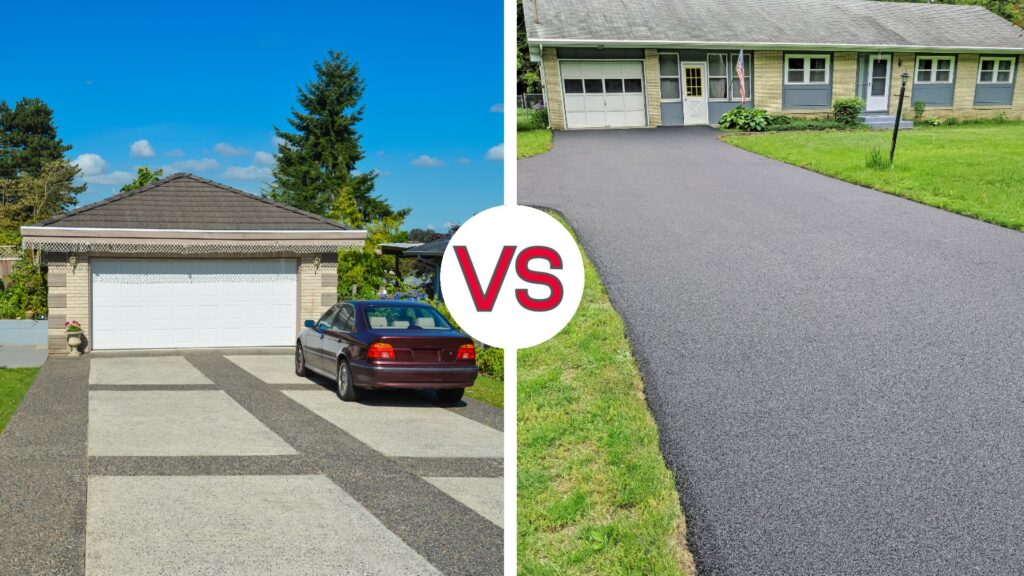
Thinking about replacing your driveway, but not sure what’s the best material to choose? Cement OR concrete?
Well, you are not alone. Believe it or not, one out of five people is stuck in the same confusion and cannot figure out the real difference when it comes to making a decision. Hence, many people end up making the wrong decision and regret it later. Unfortunately, 20% of homeowners face this dilemma.
One day, they believed cement was the binder. And on the very next day, they are convinced that concrete is the masterpiece that stands the test of time. But what exactly is the best choice?
Keep one thing in mind for sure. Cement and concrete are not the same thing. Understanding the differences between two materials helps you make an informed decision.
So, let’s find out cement or concrete for your next project?
Cement Vs. Concrete – Here’s Your Quick Answer
Let’s think of it this way. Cement is an ingredient, and concrete is the final product.
Cement = a component
Concrete = the finished mixture used for driveways
So actually, a cement driveway is a concrete driveway.
When someone says they have a cement driveway, they actually mean they have a concrete driveway unless they have installed something unusual.
What is Cement?
To understand the difference better, we need to break down cement and concrete.
So, cement is basically a powdered binding agent that becomes paste-like when it’s mixed with water. This fine grey powder is made from limestone, clay, silica, and iron. And the most common type is Portland cement. It acts as a glue that holds the concrete together. But it’s not very durable on its own for driveways.
What is Concrete?
Now let’s talk about concrete.
Concrete is mainly a mixture of cement, water, sand, and gravel. Once all of these are combined, the mixture cures into a strong, rock-like material ideal for driveways, patios, and foundations.
It’s durable and long-lasting, and extremely strong when mixed and installed correctly. It can be stamped, colored, and polished as well, and is considered a standard material for driveways.
Cement Vs. Concrete Driveway – Is There a Choice?
The truth is, a cement driveway doesn’t exist. It would be too soft and brittle to withstand any vehicle’s weight. So all the driveways marketed as “cement” are actually concrete.
When you compare cement with concrete, you are really comparing:
- A driveway made of a complete concrete mix
- A hypothetical driveway made of only cement (which is not recommended).
Major Problems with Cement-Only Driveways
As mentioned above, cement driveways are too soft, which is why there are lots of problems associated with cement-only driveways. Some of them are:
- Too weak to handle vehicle weight
- Prone to cracking
- erodes quickly
- Difficult to finish properly
- Absorbs moisture
Cement is not designed to be used alone for structural surfaces. That’s why concrete exists, because cement is not enough to handle any complexities.
Top Benefits of Concrete Driveways
Concrete is one of the most widely used materials, and for good reasons.
- Extremely durable
- Low maintenance
- Weather-resistant
- Handles heavy vehicles
- Can be customized
- Adds curb appeal and home value
So, if you want a driveway that doesn’t need constant maintenance, looks good, and feels durable, then concrete is a great choice.
Appearance Options for Concrete Driveways
Concrete is not just grey anymore. You have a lot of design choices for your driveway. Some of them are:
- Stamped concrete
- Colored concrete
- Stained concrete
- Exposed aggregate
- Salt finish
- Broom finish
- Polished concrete
Cement Vs. Concrete Driveway – Cost Comparison
Since a cement driveway is not a practical choice. We will compare:
- Concrete driveway
- Other materials like asphalt, gravel, and pavers
Concrete driveway costs depend on thickness, reinforcement, decorative finishes, and local labor rates. So, it typically costs around $6-$18 per sq ft. And a standard driveway costs between $5,000 – $12,000.
Concrete Wins Durability as Well!
Concrete is highly strong because the ingredients balance out.
- Cement binds
- Sand fills gaps
- Gravel adds structural strength
- Water triggers the chemical reaction
Durability features of concrete are:
- Resists vehicles
- Withstands heat and sun
- Handles freezing and thawing (with proper mix)
- Lasts decades
Maintenance Differences
Concrete requires minimal upkeep.
Some important maintenance steps are:
- Reseal every 2–3 years
- Clean periodically with a hose
- Avoid deicing salts in the first winter
- Fill cracks early to prevent spread
Myths About Concrete and Cement
There are lots of myths circulating around about concrete and cement. For example:
- Myth #1: Concrete dries.
Reality: Concrete cures through a chemical process.
- Myth #2: Cement is the final product.
Reality: Cement is just the binder.
- Myth #3: Concrete cracks because it’s weak.
Reality: All concrete cracks eventually. However, you can protect it through proper installation and good curing practices.
Concrete Driveway Lifespan
With care and proper installation, you can expect 25-40 years of life. In fact, sometimes 50 years in mild climates.
Factors that Affect Concrete Driveway Longevity
- Quality of the concrete mix
- Proper installation
- Correct thickness
- Soil stability
- Climate and freeze cycles
- Maintenance habits
A great mix, combined with professional installation, is key to concrete driveway longevity.
Signs Your Concrete Driveway Needs Attention
Always look out for these signs:
- Cracks wider than 1/8″
- Uneven surfaces
- Flaking or spalling
- Standing water
- Weeds growing through joints
- Discoloration
When you notice any of the above signs, it’s time to cure your driveway. Remember, most issues can be easily repaired when caught early.
Final Thoughts
Understanding the difference between cement and concrete might seem like a small detail, but it makes a big difference when it comes to choosing the right driveway material.
With expert guidance, high-quality materials, and years of experience in driveway installation, Vinewood Hardscapes helps homeowners choose the right solution based on style, budget, and long-term performance.
Whether you want a clean and simple concrete driveway, a textured finish, or something decorative and eye-catching, our team can bring your vision to life with professional craftsmanship. We offer smart guidance, strong materials, and perfect installation for delivering a driveway that can last for decades.