Wondering which is the best retaining wall material for homes in Eastern Washington that actually holds up through the entire winter?
Well, you are not alone. More than 12,000 people in Washington find themselves confused and looking for materials that deliver the best performance. After all, retaining walls are not just responsible for holding up the soil back, but also stand up to dry summers, freezing winters, and seasonal moisture changes.
So, why not choose the best material that lasts for decades and delivers exceptional performance based on your expectations? Whether you belong to Yakima or the TriCities, choosing the right material can make a significant difference.
Let’s find out the best retaining wall materials for Eastern Washington homes based on durability, costs, and maintenance requirements.
Why Material Choice Matters?
Yes, we know many homeowners prefer the appearance of the retaining walls rather than the materials, which is quite understandable.
However, in Eastern Washington, performance also matters as much as appearance. A good retaining wall must be able to handle:
- Frost movement during winter
- Soil expansion and contraction
- Water pressure behind the wall
- Strong summer sun exposure
- Long-term erosion control
But before choosing a material, it’s also important to evaluate:
- Wall height
- Soil conditions
- Drainage requirements
- Property slope
- Desired appearance
- Budget
- Expected lifespan
Choosing right retaining wall material becomes even more important when walls are exposed to repeated seasonal changes.
The Best Retaining Wall Materials
Now let’s discuss some of the best retaining wall materials for homes in Eastern Washington:
- Concrete blocks
- Natural stone
- Timber
- Poured concrete
- Gabion
Note down these preferred choices below for homeowners in Eastern Washington.
-
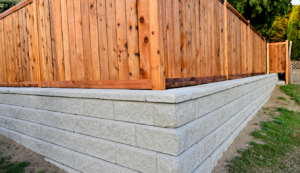
Segmental Concrete Blocks
Segmental concrete blocks are undoubtedly the leading choices for homeowners as these are specifically designed to resist soil pressure. Here’s why they are popular:
- Designed for retaining wall applications
- Excellent freeze-thaw resistance
- Available in many colors and textures
- Suitable for both straight and curved walls
- Compatible with geogrid reinforcement systems
Some of their advantages are:
- Long service life
- Minimal maintenance
- Strong resistance to cracking
- Professional appearance
- Works well on steep slopes
Here are a few drawbacks as well:
- Higher upfront cost than timber
- Professional installation often recommended
- Drainage design remains critical
Best For
- Hillside properties
- Large grade changes
- Residential landscaping
- Long-term investment projects
According to experts, general installations totally range from $25–$60+ per square foot depending on different factors such as labor costs, wall height, and others.
-
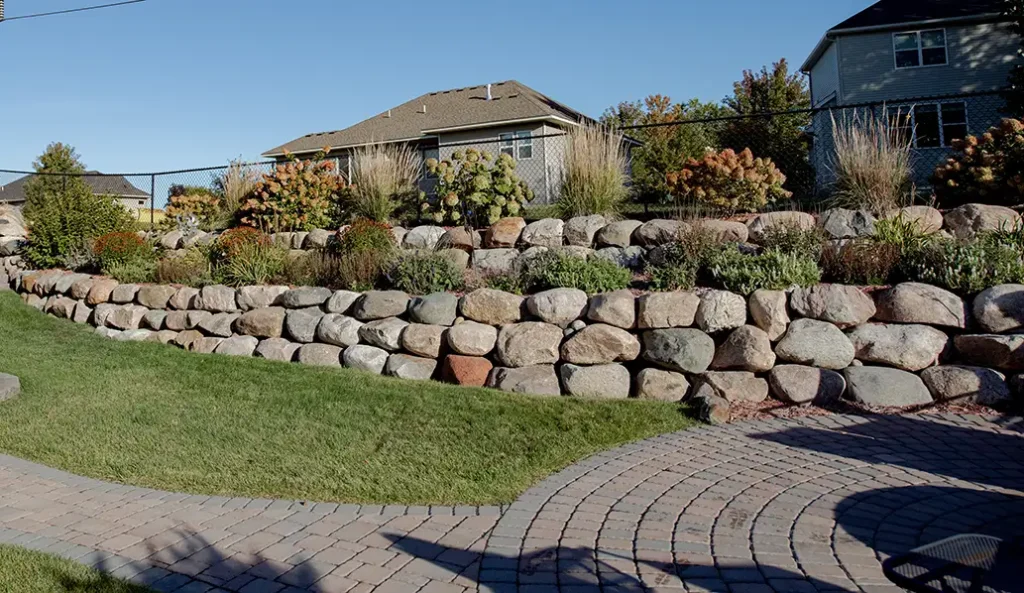
Natural stone
Unlike others, natural stone offers timeless character and appeal. Especially in rural properties and ranch-style homes, natural stones complement the surrounding environment beautifully.
Some of its advantages are:
- Exceptional visual appeal
- Extremely durable
- Resistant to UV degradation
- Minimal long-term maintenance
- Increases perceived property value
Stones perform quite well, because:
- It tolerates temperature swings
- It resists weathering
- It handles prolonged sun exposure
- It can flex slightly in dry-stack applications
Best for:
- Luxury homes
- Estate properties
- Vineyard landscapes
- Naturalistic designs
- Historic-style architecture
However, natural stone is also one of the most expensive options often ranging from $40–$100+ per square foot depending on installation complexity.
-
Poured Concrete
When it comes to providing maximum strength, nothing is better than poured concrete. Their structure is capable of retaining significant soil loads.
Some of its benefits include:
- High structural strength
- Clean modern appearance
- Suitable for tall walls
- Excellent engineering flexibility
- Can be textured or stained
Many homeowners choose poured concrete due to:
- Contemporary homes
- Tight spaces
- Tall retaining applications
- Heavy soil loads
But remember, poured concrete’s strength can also become its weakness. It forms a rigid structure, due to which foundation movement leads to cracking over time.
Best for:
- Engineered retaining systems
- Modern architecture
- High-load applications
- Urban residential lots
This material costs usually range from $30–$75+ per square foot depending on site conditions.
-
Timber
Timber remains one of the most common options for small residential projects.
Homeowners prefer timber because of its affordability and appearance. Some of its benefits are:
- Lower initial cost
- Faster installation
- Warm, natural aesthetic
- Good for garden terraces
- DIY-friendly for smaller walls
Timber is attractive and budget-friendly solution and blends naturally into:
- Rustic landscapes
- Cabin properties
- Rural homes
- Woodland settings
Its typical lifespan is 10-20 years depending on wood conditions and environmental exposure.
Best for:
- Small retaining projects
- Garden walls
- Budget-focused installations
- Temporary landscape solutions
Since it’s the least expensive option, it usually ranges from $15–$35 per square foot.
-
Gabion
Gabion is getting tremendous popularity in modern landscape designs.
Its overall appearance is distinctive and contemporary. Some of its benefits are:
- Excellent drainage
- Strong erosion resistance
- Minimal hydrostatic pressure buildup
- Environmentally friendly appearance
- Adaptable to uneven terrain
However, gabion also has some drawbacks like:
- Industrial appearance isn’t for everyone
- Wire baskets eventually age
- Premium basket systems can be costly
- Requires quality rock fill
Best for
- Erosion control
- Rural properties
- Contemporary landscapes
- Large slopes
- Drainage-sensitive sites
Although gabion provides decades of service like between 40 and 80 years of performance.
Comparison Between All the Materials
Let’s compare all the materials side by side to analyze their performance and durability.
| Materials | Lifespan | Maintenance | Best for |
| Concrete blocks | 50–100+ years | Low | Most Eastern Washington homes |
| Natural stone | 75–150 years | Very low | Premium aesthetics |
| Poured concrete | 50–100+ years | Low | Tall, structural walls |
| Timber | 10–25 years | Moderate | Budget-friendly projects |
| Gabion | 40–80 years | Low | Drainage and erosion control |
Key Factors to Consider Before Choosing a Material
Before you decide anything, it’s important to ask yourself:
- How steep is the slope?
- What’s your budget?
- Do you prefer a natural or modern look?
- How much maintenance are you willing to perform?
- Will the wall need engineering approval?
- How important is long-term durability?
Answering these questions can help narrow down the best choices and you can make an informed decision.
Final Thoughts
In Eastern Washington, where freeze-thaw cycles, dry summers, and varying soil conditions can impact long-term performance, investing in the right material from the start can save time and money down the road.
Whether you prefer the versatility of concrete blocks, the timeless appeal of natural stone, or the affordability of timber, proper design and drainage are essential for lasting results.
If you’re planning a retaining wall project and want guidance tailored to your property, the team at Vinewood Hardscapes can help you evaluate your options and select a solution that complements both your landscape and Eastern Washington’s unique environment.